Blue and blackish willow: natural colouring that plays just as well
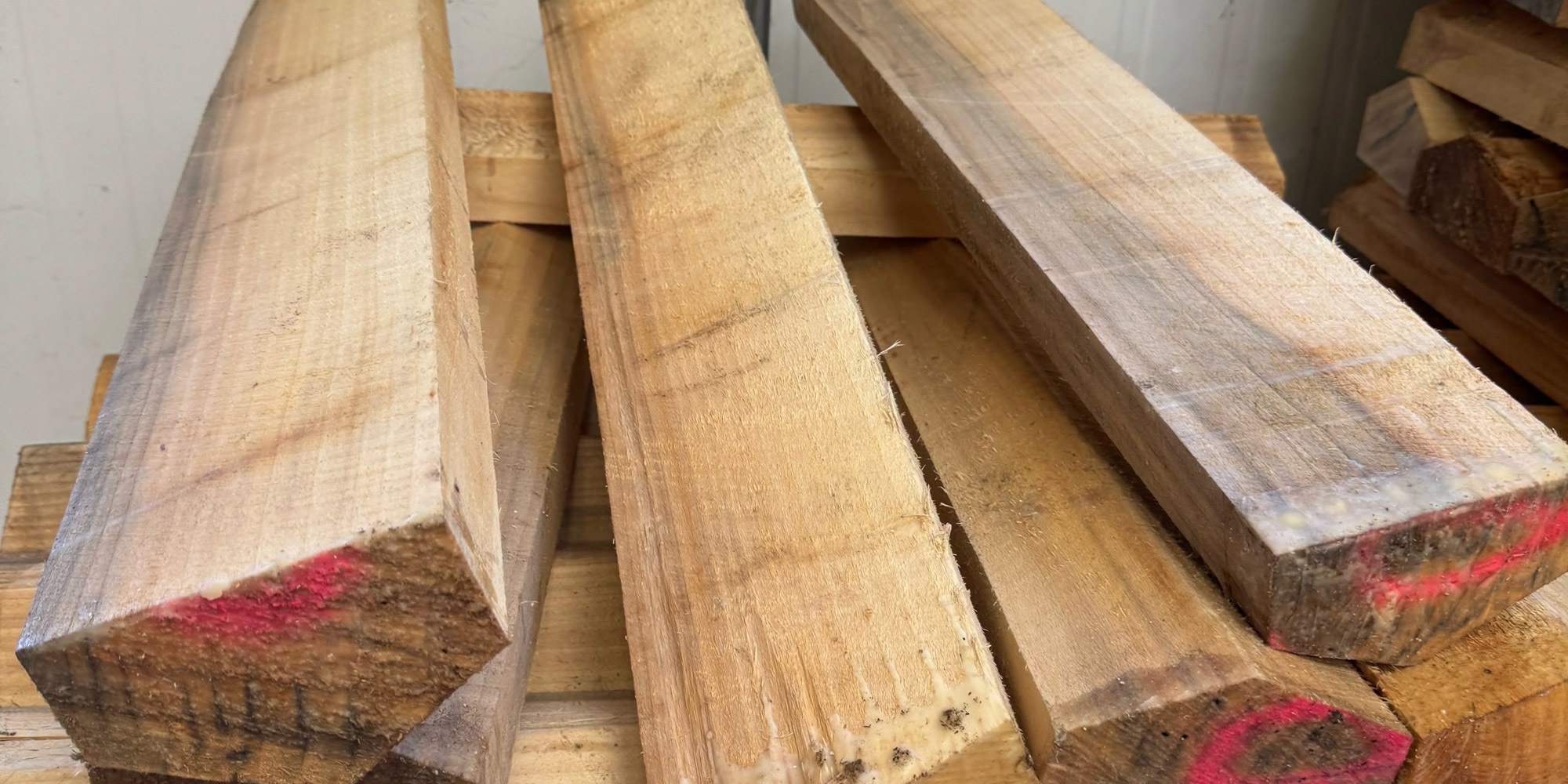
Following our recent articles on knots, grains and the red wood myth, false growth lines, butterfly stain, and speck, we’re continuing our Imperfections series on the unique and often misunderstood features of English Cricket Bat Willow. This time, it’s the blue or blackish cleft. Many players still look for a pristine, pearly-white blade and assume anything else must be a compromise. It’s a mystery to us why a performance product would be judged on how it looks rather than how it plays.
What is blue or blackish willow?
It’s exactly what it sounds like: clefts with a blue, grey or blackish colour running through the timber. As our Director, Jeremy Ruggles, puts it, “We can’t understand what there is not to like about blue or blackish coloured cricket bats. They play as well as white bats, yes they look different. It’s just a colour, and it’s friendly on the pocket as well.”
What causes it?
The colour comes from the tree’s surroundings or from how the timber was treated afterwards. Mould in the air and kilns can stain the timber, while metal in the soil where the tree grew can have the same effect. Willows also grow in ditches, so a cattle or pig manure heap nearby can seep into the water and discolour the wood, and even oak leaves falling into a pond can cause it.
For the cricketer: a colour, not a compromise
Blue and blackish willow is a cosmetic feature, and it shouldn’t deter any player from buying a bat with it. These bats play as well as white ones. They just look different. Because the look is less traditional, these bats are often more affordable, so a player who cares about performance over appearance can get a great bat for less. A few of our customers stock them and tell us they sell out very quickly. It’s another reminder that in the world of English Cricket Bat Willow, a bat’s story is often more important than its look.