Butterfly stain: a Willow feature that adds strength
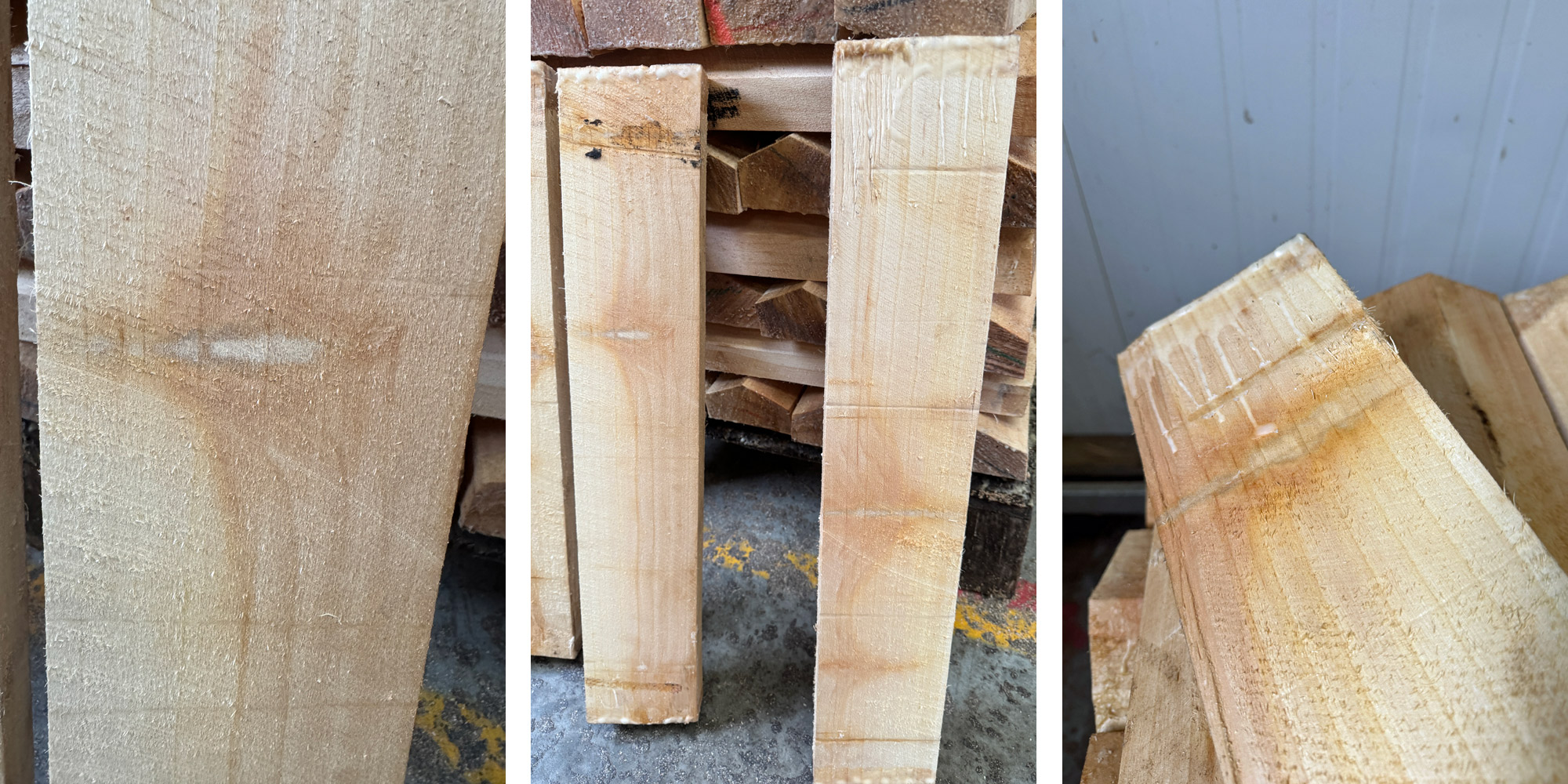
Following our recent, well-received article on ‘speck,’ we’re continuing our series on the unique and misunderstood characteristics of English Cricket Bat Willow. As we uncovered with speck, what might seem like a flaw at first glance often has a deeper story to tell. In this article, we’re delving into another distinctive feature of willow: “butterfly stain.”
What is ‘butterfly stain’?
Simply enough, it’s a type of stain in the willow that, as the name suggests, resembles a butterfly – a central body-like mark with what appears to be wings extending from either side.
What causes it?
Butterfly stain is caused by a few key factors. One cause is a shock to the tree from the late pruning of thick, woody branches. Another is the interaction of acidic properties in the soil, often found in areas that contain large stones or brick rubble.
This stain often forms right by the knot where the woody branch was removed. Other causes include shock to the root system from acidic properties in the soil (such as large stones or brick rubble), or long periods of the tree sitting in water followed by the water freezing.
The tree’s roots generally grow outwards in search of moisture and nourishment. When they are confronted by areas of stone or other obstacles, it can slow their growth rate. This in turn checks the flow of sap, which then interacts with acidic soil to create the stain. While this stain can sometimes be spotted in the bark, making trees worth less as a result.
For the cricketer: a mark of durability, not a flaw
Butterfly stain is starting to get popular, however, and for good reason. Just like speck, butterfly stain is a purely cosmetic issue and should not deter any player from buying a bat with it. While its presence can add some weight, it also adds significant strength.
Bats with butterfly stain will have a longer life and a much lower chance of breakages. This natural feature actually reinforces the timber, much like speck, offering added durability. Because these bats are cosmetically imperfect, they are often available at a lower price. This means a player who is not bothered by appearances can acquire a high-performing, longer-lasting bat for a much better value.
It’s another great reminder that in the world of English willow, a bat’s story is often more important than its look.