From tree to bat – How we produce English Cricket Bat Willow clefts

In order to supply around 75% of the world’s English Cricket Bat Willow, we rely on the fantastic relationships that we have with landowners all over the country.
We are always on the lookout for landowners who are interested in making a safe investment for the future, or people who have mature English Cricket Bat Willow trees already on their land.
At present we work with landowners on around 2,500 sites nationwide, but how exactly do we produce 400,000 clefts each year?
Planting
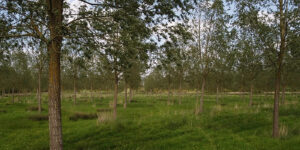
We develop relationships with landowners through advertising in farming and land publications, social media and leaflet drops to find suitable land. Sites must have a high water table in order to be ideal for planting English Cricket Bat Willow. We then plant approximately 40 trees-per-acre under contract with a view to purchasing them at maturity.
Maintenance
When planting, we offer maintenance contracts on all trees. This involves trimming and includes advice on protective measures to combat the threats posed by a variety of species including deer and squirrels.
Felling
When trees reach maturity, we agree a price with owners and then begin the felling process. This can be a difficult process so we take measures to ensure safety and apply for all the necessary licenses and permits.
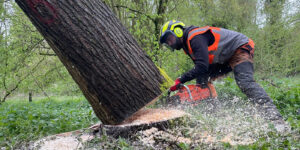
To learn more about the felling process, have a look at our Day in the life of a feller blog post.
Once felled, the trees are returned to our yard in Great Leighs, Essex.
Processing
Once back at our yard, the trees are first chopped into manageable lengths (approximately 710mm). From then, the bark is removed and they are then sent to be cut into clefts.
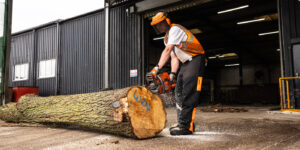
All useable timber is split into rough cleft shapes, before being cut into the perfect size and shape. Waste wood, bark and sawdust from the factory are all recycled.
Grading
The final step in the process is grading, which over the years has primarily been done by our director, Jeremy (although he now has some help). Having the same couple of people grading all clefts ensures that they are assessed fairly, in turn making sure that customers know exactly what they are going to receive.
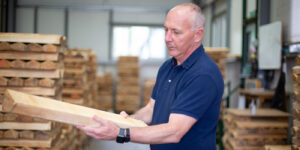
If there is any doubt as to what the grade should be, it is graded to ensure that the customer receives something better than they requested.
Dispatch
Clefts are then packaged into pallets and sent to our customers in the UK. Some are also sent either loose or in cardboard cartons to India, Pakistan, South Africa, Australia and New Zealand.